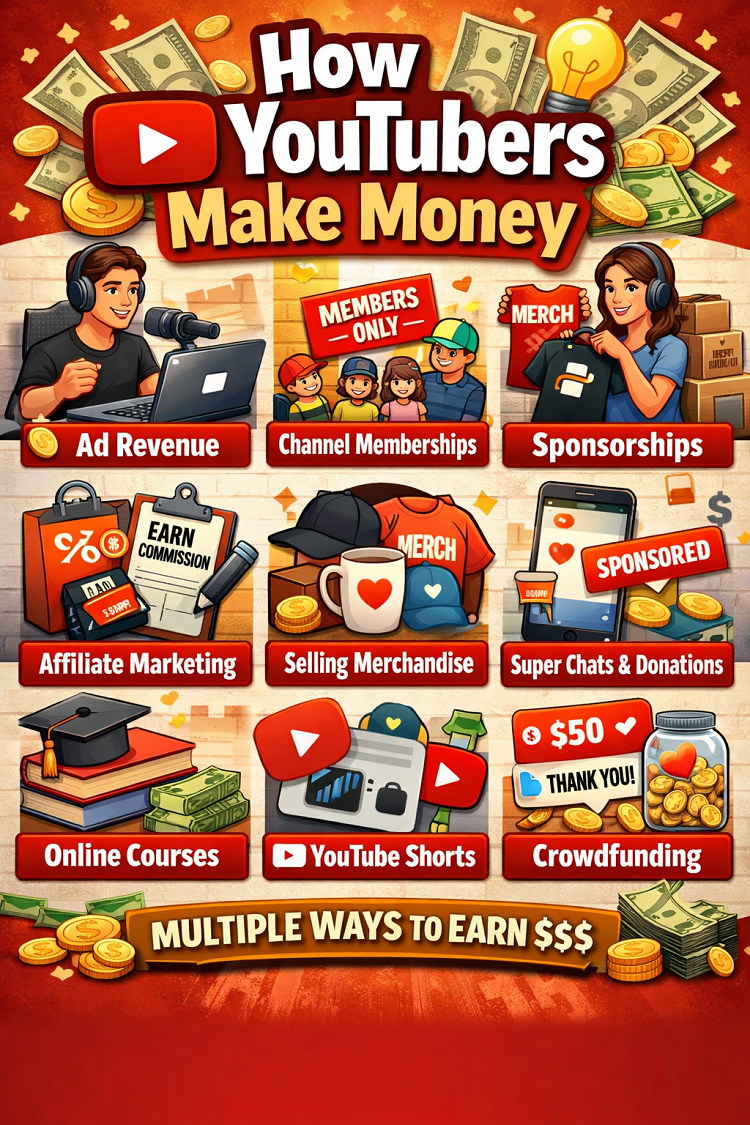
How YouTubers Make Money A Complete Guide for Beginners and Aspiring Creators
YouTube is no longer just a video-sharing website. Over the years, it has evolved into one of the world’s biggest income platforms, allowing individuals, influencers, educators, gamers, and businesses to earn real money online. From teenagers recording videos in their bedrooms to full-time creators running production teams, YouTube offers multiple ways to generate income.
But how exactly do YouTubers make money? Is it only through ads, or are there other income streams? How much can a beginner earn, and what factors affect earnings?
This article explains all the major and minor ways YouTubers make money, step by step, in clear detail.
Understanding YouTube as a Business Platform
Before diving into income methods, it’s important to understand that successful YouTubers treat their channel like a business. YouTube itself does not pay users just for uploading videos. Money comes when creators build an audience, provide value, and monetize that attention in different ways.
YouTube earnings depend on:
-
Views and watch time
-
Audience location
-
Niche or content category
-
Engagement (likes, comments, shares)
-
Monetization strategies used
Most top creators use multiple income sources, not just one.
YouTube Partner Program (YPP): The Foundation of YouTube Earnings
What Is the YouTube Partner Program?
The YouTube Partner Program (YPP) allows creators to earn money directly from YouTube through ads and other built-in monetization tools.
Eligibility Requirements for Monetization
To join YPP, a channel must:
-
Have at least 1,000 subscribers
-
Have 4,000 public watch hours in the last 12 months
or
10 million public Shorts views in the last 90 days -
Follow YouTube’s monetization policies
-
Have an AdSense account linked
Once approved, creators can enable monetization on their videos.
Earning Through YouTube Ads (Ad Revenue)
How YouTube Ads Work
YouTube places ads on monetized videos. Advertisers pay YouTube to show ads, and YouTube shares a portion of that revenue with creators.
Creators earn money when:
-
Viewers watch ads
-
Viewers click on ads (in some cases)
Types of YouTube Ads
-
Skippable in-stream ads
-
Non-skippable ads
-
Display ads
-
Overlay ads
-
Shorts feed ads
CPM and RPM Explained
-
CPM (Cost Per Mille): Amount advertisers pay per 1,000 ad views
-
RPM (Revenue Per Mille): Creator earnings per 1,000 video views
RPM depends on:
-
Audience country (USA, UK, Canada pay more)
-
Content niche (finance, tech, business pay higher)
-
Video length (longer videos allow more ads)
On average:
-
Low RPM: $0.50 – $2 per 1,000 views
-
Medium RPM: $3 – $8 per 1,000 views
-
High RPM: $10 – $30+ per 1,000 views
Channel Memberships: Monthly Income From Fans
What Are Channel Memberships?
Channel memberships allow viewers to pay a monthly fee to support a creator in exchange for exclusive perks.
Common Membership Perks
-
Members-only videos
-
Custom emojis and badges
-
Early access to content
-
Exclusive live streams
Why Memberships Are Powerful
-
Provides stable recurring income
-
Builds a loyal community
-
Not dependent on ad views
Creators keep around 70% of membership revenue, while YouTube takes a percentage.
Super Chats, Super Stickers, and Super Thanks
Monetization Through Live Streams
During live streams, viewers can send paid messages or stickers to support creators.
-
Super Chat: Highlighted paid message
-
Super Stickers: Animated paid stickers
-
Super Thanks: One-time payment on regular videos
This is especially popular among:
-
Gamers
-
Streamers
-
Educational channels
-
Entertainment creators
High-engagement live streams can generate hundreds or even thousands of dollars in a single session.
Affiliate Marketing Earning Without Ads
What Is Affiliate Marketing?
Affiliate marketing means promoting products or services and earning a commission for every sale made through your referral link.
How YouTubers Use Affiliate Marketing
-
Product reviews
-
Tutorials and how-to videos
-
Unboxing videos
-
“Top 10” recommendation videos
Popular Affiliate Programs
-
Amazon Associates
-
ClickBank
-
Digistore24
-
Software affiliate programs
-
Online course platforms
Affiliate income often exceeds ad revenue, especially for small or mid-size channels.
Sponsored Content and Brand Deals
What Are Sponsorships?
Brands pay YouTubers to promote their product or service in a video. This can include:
-
Product mentions
-
Dedicated review videos
-
Integrated promotions
How Much Do Sponsors Pay?
Sponsorship rates depend on:
-
Subscriber count
-
Average views
-
Niche
-
Audience trust
Estimated rates:
-
10,000 subscribers: $100–$500 per video
-
100,000 subscribers: $1,000–$5,000 per video
-
1 million subscribers: $10,000+ per video
Sponsorships can be one of the highest-paying income sources on YouTube.
Selling Your Own Products and Merchandise
Types of Products YouTubers Sell
-
T-shirts, hoodies, caps
-
Digital products (ebooks, templates)
-
Online courses
-
Presets and tools
-
Physical products
Why Selling Products Is Profitable
-
Full control over pricing
-
Higher profit margins
-
Strong personal branding
YouTube even integrates merchandise shelves directly under videos for eligible channels.
YouTube Shorts Monetization
How Shorts Make Money
YouTube now shares ad revenue from Shorts displayed in the Shorts feed.
Earnings depend on:
-
Total Shorts views
-
Engagement
-
Creator fund allocation
Shorts help creators:
-
Grow subscribers quickly
-
Earn bonus income
-
Attract sponsorships
While Shorts RPM is lower than long videos, viral reach can compensate.
Crowdfunding and Fan Support Platforms
External Support Options
Many YouTubers use platforms like:
-
Patreon
-
Buy Me a Coffee
-
Ko-fi
Fans voluntarily support creators with monthly or one-time payments.
This works well for:
-
Educational creators
-
Artists
-
Journalists
-
Independent content makers
Licensing and Selling Video Content
Content Licensing Explained
If a video goes viral, media companies may pay to use it.
Common licensed content includes:
-
Viral clips
-
Newsworthy footage
-
Unique recordings
Platforms like content licensing agencies help creators earn extra income without extra work.
Factors That Affect How Much YouTubers Earn
Several factors influence income:
1. Niche Selection
High-paying niches include:
-
Finance
-
Business
-
Technology
-
Education
-
Health and fitness
2. Audience Location
Views from Tier-1 countries earn more than others.
3. Consistency
Regular uploads build trust and algorithm favor.
4. Video Length and Watch Time
Longer videos with high retention earn more ads.
5. Engagement Rate
Comments, likes, and shares boost visibility and earnings.
How Much Do YouTubers Really Make?
Earnings vary widely:
-
Small channels: $50–$500/month
-
Medium channels: $1,000–$10,000/month
-
Large channels: $50,000+/month
Some top creators earn millions per year through diversified income streams.
Common Myths About YouTube Income
-
Myth: You get paid per subscriber
Truth: Subscribers don’t directly pay you -
Myth: Ads are the only income source
Truth: Ads are just one of many streams -
Myth: YouTube money is instant
Truth: It takes time, strategy, and patience
Final Thoughts: Is YouTube Worth It?
YouTube is not a get-rich-quick scheme, but it is a powerful long-term income platform. With consistency, smart monetization, and audience trust, creators can build sustainable online businesses.
The most successful YouTubers:
-
Diversify income
-
Focus on value
-
Treat YouTube like a career
Whether you want side income or full-time earnings, YouTube offers endless opportunities for those willing to learn and stay consistent.
