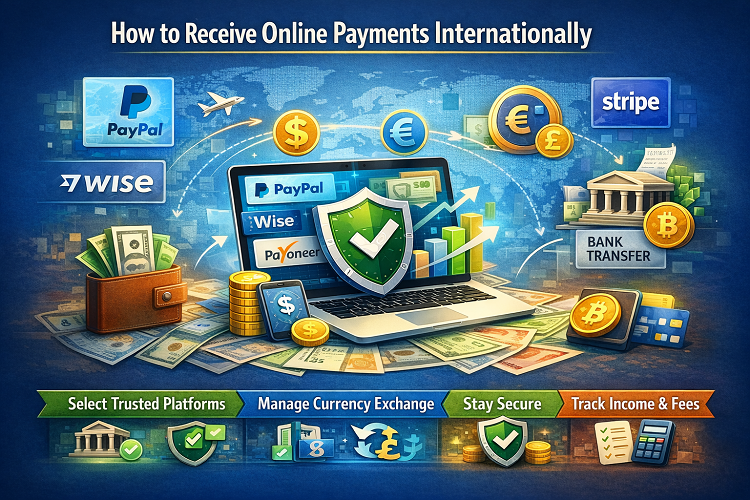
How to Receive Online Payments Internationally
The global digital economy has made it easier than ever to do business across borders. Freelancers, e-commerce sellers, remote workers, consultants, and online businesses now serve customers worldwide. However, receiving online payments internationally can feel complicated due to currency differences, fees, regulations, and platform choices.
Understanding the safest, fastest, and most cost-effective ways to receive international payments is essential for protecting your income and growing your global presence. This guide explains everything you need to know from payment platforms to currency conversion, compliance, and best practices.
Why International Online Payments Matter
International payments are no longer limited to large corporations. Today, individuals and small businesses rely on global transactions for income. Common examples include:
-
Freelancers working with overseas clients
-
E-commerce stores selling internationally
-
Remote employees paid by foreign companies
-
Digital creators earning from global audiences
-
Online service providers and consultants
The ability to receive payments globally opens access to larger markets and higher earning potential. But without the right system, you risk delays, hidden fees, fraud, and compliance issues.
Key Challenges in Receiving International Payments
Before choosing a payment method, it’s important to understand the main challenges involved.
Currency Conversion
International payments often require converting money from one currency to another. Exchange rates fluctuate, and platforms may add hidden margins. Even a small percentage difference can significantly impact your income over time.
Transfer Fees
Some services charge:
-
Receiving fees
-
Currency conversion fees
-
Withdrawal fees
-
Monthly account fees
If not carefully managed, these costs reduce your profit.
Payment Delays
Cross-border transfers may take several days depending on the platform, banks involved, and verification requirements.
Regulatory Compliance
Governments require identity verification, tax reporting, and anti-money laundering compliance. Using reputable platforms ensures you remain legally protected.
Best Platforms for Receiving International Payments
Choosing the right platform is the most important step. Each option has strengths depending on your needs.
PayPal: Global Convenience and Accessibility
PayPal is one of the most widely used international payment platforms.
Advantages
-
Accepted in over 200 countries
-
Easy setup for individuals and businesses
-
Strong buyer and seller protection
-
Supports multiple currencies
-
Quick transfers between PayPal accounts
Considerations
PayPal fees can be higher than some alternatives, especially for currency conversion. However, its reliability and global reach make it a popular choice for beginners.
Best for: Freelancers, small businesses, digital sellers
Wise (Formerly TransferWise): Low Currency Fees
Wise is known for transparent pricing and real exchange rates.
Advantages
-
Mid-market exchange rates
-
Low and clear fees
-
Multi-currency accounts
-
Local bank details in several countries
-
Fast transfers
Wise allows you to hold money in multiple currencies and convert only when rates are favorable.
Best for: Professionals receiving frequent international payments
Stripe: Ideal for Online Businesses
Stripe is a powerful payment processor used by e-commerce stores and SaaS businesses.
Advantages
-
Accepts credit and debit cards worldwide
-
Subscription billing features
-
Advanced fraud protection
-
Developer-friendly integrations
-
Supports many currencies
Stripe automatically handles currency conversion and global payment compliance.
Best for: Online stores, subscription services, startups
Payoneer: Freelancer and Marketplace Friendly
Payoneer specializes in international business payments.
Advantages
-
Global receiving accounts
-
Marketplace integrations (Amazon, Fiverr, Upwork)
-
Competitive exchange rates
-
Easy bank withdrawals
It is particularly useful for freelancers working on international platforms.
Best for: Freelancers and marketplace sellers
Direct International Bank Transfers
Traditional bank transfers remain an option for international payments.
Pros
-
Secure and official
-
Suitable for large amounts
-
Direct bank-to-bank transfer
Cons
-
Higher fees
-
Slower processing
-
Complex paperwork
Best for: Large business transactions
Cryptocurrency Payments: A Modern Alternative
Cryptocurrency allows borderless transactions without banks.
Benefits
-
Fast global transfers
-
Lower fees in many cases
-
No currency restrictions
-
24/7 availability
Risks
-
Price volatility
-
Regulatory uncertainty
-
Security responsibilities
Crypto is best used when both parties understand the risks.
Setting Up a Multi-Currency Account
A multi-currency account lets you receive, hold, and send different currencies without immediate conversion.
Benefits include:
-
Reduced conversion losses
-
Flexibility in exchange timing
-
Professional global presence
-
Simplified accounting
Platforms like Wise and Payoneer offer built-in multi-currency features.
Understanding Exchange Rates and Hidden Fees
Many platforms advertise low fees but profit through exchange rate margins.
To protect your income:
-
Compare mid-market exchange rates
-
Check conversion spreads
-
Read fee breakdowns carefully
-
Use fee calculators before accepting payments
Even a 2% difference can cost hundreds over time.
Protecting Yourself from Payment Fraud
International transactions increase exposure to scams. Protect yourself by following strict security practices.
Essential Safety Measures
-
Use two-factor authentication
-
Never share login credentials
-
Verify client identity
-
Avoid suspicious payment links
-
Keep transaction records
-
Monitor account activity regularly
Only accept payments through verified platforms.
Legal and Tax Considerations
Receiving international payments may create tax obligations depending on your country.
Important Steps
-
Track all income accurately
-
Keep invoices and receipts
-
Understand foreign income tax rules
-
Consult a tax professional if needed
Using legal platforms helps maintain compliance.
Speed vs Cost: Choosing the Right Balance
Different payment methods prioritize either speed or affordability.
| Method | Speed | Cost | Best Use |
|---|---|---|---|
| PayPal | Fast | Higher | Small payments |
| Wise | Fast | Low | Frequent transfers |
| Stripe | Instant | Moderate | Online sales |
| Bank Transfer | Slow | High | Large payments |
| Crypto | Instant | Variable | Global peer payments |
Choosing wisely depends on your payment volume and urgency.
Building a Professional Payment System
A professional international payment setup includes:
-
Multiple receiving options
-
Backup payment methods
-
Clear invoices
-
Transparent pricing
-
Secure transaction records
Offering clients flexible payment options increases trust and convenience.
Tips to Reduce International Payment Costs
Smart strategies can save money over time:
-
Batch smaller payments into larger transfers
-
Use multi-currency accounts
-
Monitor exchange rates
-
Choose low-fee platforms
-
Negotiate payment terms with clients
Efficiency matters when dealing with global income.
Future Trends in International Payments
The global payment industry continues evolving.
Emerging trends include:
-
Digital wallets replacing banks
-
Blockchain payment systems
-
Instant cross-border settlements
-
AI fraud detection
-
Global fintech regulation improvements
Businesses that adapt early gain competitive advantages.
Final Thoughts
Receiving international payments is no longer complicated — but it requires smart choices. The safest and most efficient approach combines trusted platforms, fee awareness, strong cybersecurity, and legal compliance.
Whether you’re a freelancer, entrepreneur, or online seller, building a reliable international payment system ensures smooth income flow and long-term financial stability.

2 thoughts on “How to Receive Online Payments Internationally”