In today’s digital world, freelancing has become one of the most popular and flexible ways to earn money. Millions of people across the globe are choosing freelancing over traditional 9-to-5 jobs because it offers freedom, independence, and unlimited earning potential. Whether you are a student, a stay-at-home parent, a full-time employee looking for extra income, or someone who wants to work from home, freelancing can be a powerful opportunity.
But what exactly is freelancing? How does it work? And how can beginners get started successfully?
In this complete beginner’s guide, we will explore everything you need to know about freelancing in detail.
What Is Freelancing?
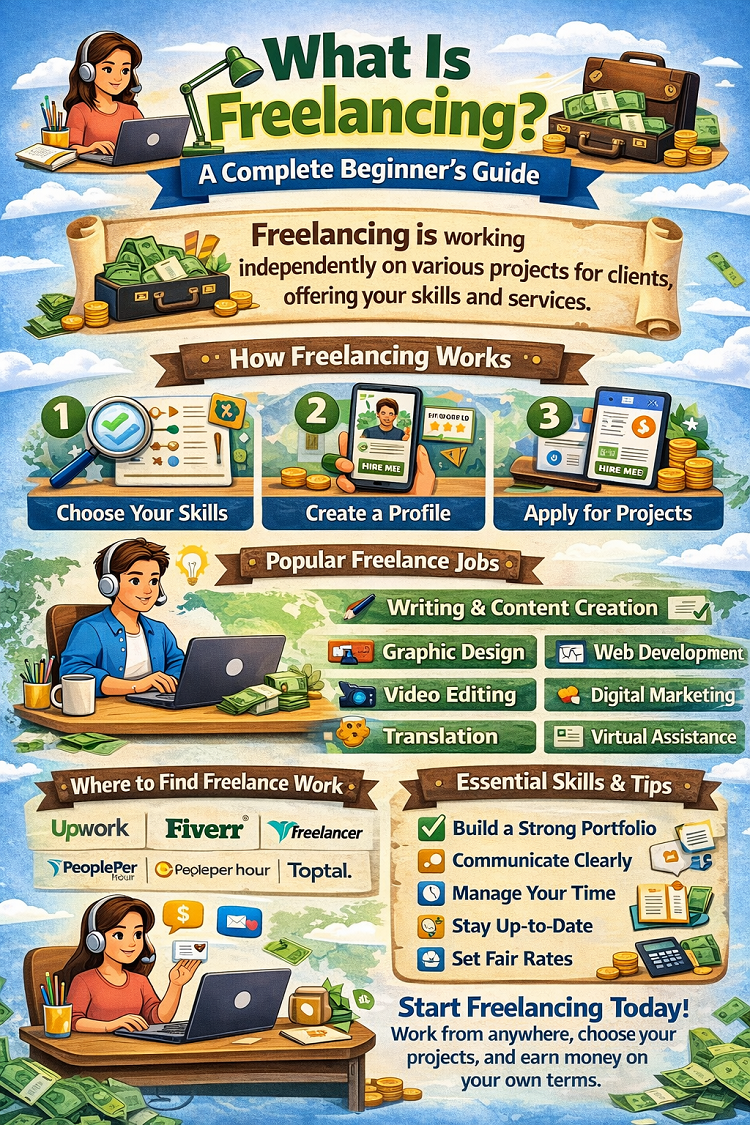
Freelancing is a type of self-employment where you offer your skills and services to clients on a project or contract basis instead of working permanently for one employer. A freelancer works independently and is usually paid per project, per hour, or per task.
Unlike traditional employees, freelancers:
-
Do not have a fixed salary.
-
Do not work under long-term employment contracts.
-
Can work with multiple clients at the same time.
-
Have control over their schedule and workload.
For example, if you are a graphic designer, you might design a logo for one company this week and create social media posts for another company next week. You are not tied to one employer.
Freelancing is legal in most countries, but freelancers are responsible for managing their own taxes, contracts, and business operations.
How Does Freelancing Work?
Freelancing works in a simple process:
1. Choose a Skill
First, you identify a skill you can offer. This could be:
-
Writing
-
Graphic design
-
Web development
-
Video editing
-
Digital marketing
-
Translation
-
Programming
-
Virtual assistance
If you don’t have a professional skill yet, you can learn one online through free or paid courses.
2. Create a Profile or Portfolio
Next, you create a profile on freelance platforms such as:
-
Upwork
-
Fiverr
-
Freelancer
-
PeoplePerHour
-
Toptal
Your profile should include:
-
A professional photo
-
A clear description of your services
-
Your experience
-
Sample work (portfolio)
A strong profile increases your chances of getting hired.
3. Apply for Projects or Receive Orders
You can either:
-
Apply for jobs posted by clients, or
-
Create service listings and wait for clients to contact you.
Clients review your proposal and decide whether to hire you.
4. Complete the Work
Once hired, you complete the project according to the agreed terms and deadline.
5. Get Paid
After successful completion, you receive payment through the platform or directly from the client.
Why Is Freelancing So Popular?
Freelancing has grown rapidly because of several benefits:
1. Work From Anywhere
You can work from home, a café, or even while traveling. All you need is a laptop and internet connection.
2. Flexible Schedule
Freelancers choose their working hours. You can work in the morning, evening, or even at night.
3. Unlimited Income Potential
Unlike fixed salaries, freelancers can increase income by:
-
Taking more projects
-
Increasing rates
-
Offering premium services
4. Be Your Own Boss
You make decisions about your work, clients, and pricing.
5. Global Opportunities
You can work with clients from different countries and earn in international currencies.
Popular Freelance Jobs
Freelancing includes many types of jobs. Here are some of the most in-demand freelance skills:
Writing & Content Creation
-
Blog writing
-
Article writing
-
Copywriting
-
Script writing
-
Technical writing
Graphic Design
-
Logo design
-
Social media graphics
-
Branding
-
Posters and banners
Web Development
-
Website creation
-
WordPress development
-
E-commerce sites
Digital Marketing
-
Social media management
-
SEO services
-
Email marketing
-
Paid advertising
Video Editing
-
YouTube editing
-
Reels and TikTok videos
-
Promotional videos
Virtual Assistance
-
Email management
-
Scheduling
-
Data entry
Programming & IT
-
App development
-
Software development
-
Cybersecurity
The best skill depends on your interest and market demand.
Skills You Need to Succeed as a Freelancer
Freelancing is not just about technical skills. You also need soft skills to succeed.
1. Communication Skills
Clear communication builds trust with clients.
2. Time Management
You must manage deadlines and multiple projects effectively.
3. Self-Discipline
Since you work independently, you must stay motivated without supervision.
4. Problem-Solving Skills
Clients may request changes or face issues. You must handle them professionally.
5. Financial Management
Freelancers manage:
-
Invoices
-
Taxes
-
Savings
-
Investments
How Much Can You Earn From Freelancing?
Freelancing income varies depending on:
-
Skill level
-
Experience
-
Country
-
Demand
-
Reputation
Beginners may start with lower rates to build experience. Over time, as you gain reviews and improve skills, you can charge higher fees.
Some freelancers earn:
-
Part-time income ($200–$500 per month)
-
Full-time income ($1000–$5000 per month)
-
High-level professionals may earn even more
Your income depends on your dedication and strategy.
Challenges of Freelancing
Freelancing offers freedom, but it also comes with challenges:
1. Irregular Income
Work is not always consistent. Some months may be busy, others slow.
2. Competition
Freelance platforms are competitive, especially for beginners.
3. No Employee Benefits
Freelancers do not get:
-
Paid leave
-
Health insurance
-
Retirement benefits
4. Client Management
Some clients may:
-
Delay payments
-
Request extra revisions
-
Communicate poorly
Learning how to handle difficult clients is important.
Legal and Financial Considerations
Freelancing is legal in most countries, but you must follow local laws.
1. Pay Taxes
Freelancers must declare income and pay taxes according to their country’s regulations.
2. Use Contracts
Written agreements protect both freelancer and client.
3. Avoid Copyright Issues
Only use original content or properly licensed materials.
4. Protect Your Data
Use secure passwords and trusted payment methods.
Tips for Beginners
If you are new to freelancing, follow these practical tips:
Start With One Skill
Don’t try to offer everything. Focus on mastering one skill first.
Build a Strong Portfolio
Even if you don’t have clients yet, create sample projects to showcase your abilities.
Offer Competitive Pricing
Begin with reasonable rates to attract first clients.
Deliver Quality Work
Client satisfaction leads to positive reviews and repeat business.
Keep Learning
The digital world changes quickly. Stay updated with trends and tools.
Freelancing vs Traditional Job
| Feature | Freelancing | Traditional Job |
|---|---|---|
| Work Location | Anywhere | Office |
| Income | Variable | Fixed |
| Flexibility | High | Limited |
| Job Security | Less stable | More stable |
| Control | Full control | Employer controlled |
Both have advantages and disadvantages. The right choice depends on your goals and personality.
Can Freelancing Become a Full-Time Career?
Yes, many people turn freelancing into a full-time career. Some even build agencies and hire teams. However, it requires:
-
Patience
-
Consistency
-
Strong reputation
-
Long-term planning
Freelancing is not a “get rich quick” method. It is a real business that needs effort and professionalism.
Final Thoughts
Freelancing is a modern way of working that allows individuals to offer their skills independently and earn money online. It provides flexibility, global opportunities, and the potential for financial growth. However, it also requires discipline, skill development, and proper planning.
If you are ready to learn, improve, and stay consistent, freelancing can become a powerful career path. Start small, focus on quality, build your reputation, and gradually grow your income.
The future of work is becoming more digital and flexible. Freelancing is not just a trend—it is a long-term opportunity for those willing to take initiative and work smartly.
