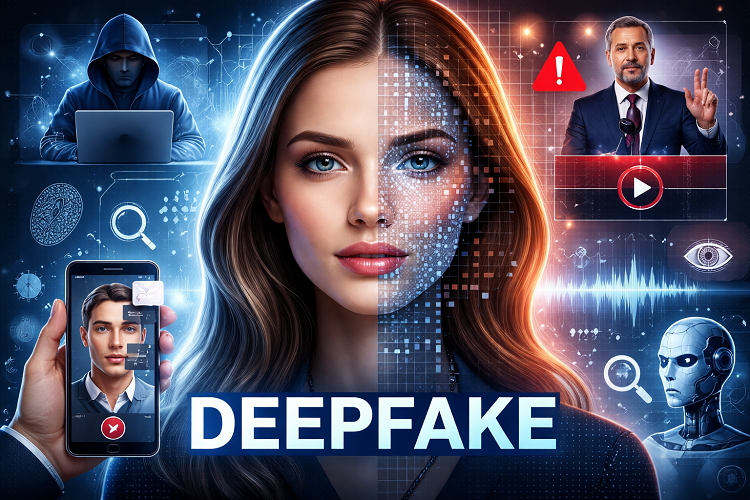
What Is Deepfake and How to Detect It
Introduction
In the digital age, technology evolves at an astonishing pace. Among the most controversial and powerful innovations in recent years is deepfake technology. From viral social media clips to political controversies, deepfakes have become a major topic of discussion worldwide. While this technology can be used for entertainment and creative purposes, it also raises serious concerns about misinformation, fraud, and digital manipulation.
Understanding what deepfakes are and how to detect them is essential in today’s information-driven society. This article explores deepfakes in detail—how they work, their uses, risks, and most importantly, how to identify them.
What Is a Deepfake?
A deepfake is a form of synthetic media in which a person’s face, voice, or actions are digitally altered using artificial intelligence (AI) and deep learning techniques. The term “deepfake” combines “deep learning” and “fake.”
Deepfakes use advanced AI systems to analyze large datasets of images, videos, or audio recordings of a person. Once trained, the AI can generate highly realistic content that appears authentic but is entirely fabricated.
For example:
-
A celebrity’s face placed onto another person’s body.
-
A political leader appearing to say something they never actually said.
-
A person’s voice cloned to imitate real speech patterns.
The technology behind deepfakes is primarily powered by neural networks such as Generative Adversarial Networks (GANs).
How Deepfake Technology Works
1. Data Collection
Deepfake systems require a large amount of visual or audio data. This can include:
-
Photos from social media
-
Public interviews
-
Videos from news platforms
-
Audio recordings
The more data available, the more accurate the deepfake can become.
2. Deep Learning and Neural Networks
Deepfake creation relies heavily on deep learning models. One of the most common methods uses GANs (Generative Adversarial Networks). GANs consist of two neural networks:
-
Generator: Creates fake content.
-
Discriminator: Evaluates whether the content is real or fake.
These two systems compete against each other. Over time, the generator improves until the fake content becomes extremely realistic.
3. Face Swapping and Voice Cloning
Modern deepfake tools can:
-
Map facial expressions onto another face.
-
Sync lip movements with new audio.
-
Clone someone’s voice by analyzing speech patterns.
Some tools can even create entirely synthetic humans who do not exist in real life.
Types of Deepfakes
Deepfakes are not limited to videos. They come in various forms:
1. Video Deepfakes
These are the most common and involve swapping faces or altering speech in videos.
2. Audio Deepfakes
AI-generated voices that mimic real individuals. These are often used in phone scams or fraud attempts.
3. Image Deepfakes
Still images created or altered using AI to look like real photographs.
4. Text-Based Deepfakes
AI-generated text that mimics the writing style of a real person.
Legitimate Uses of Deepfake Technology
Although deepfakes are often associated with harm, they also have positive and creative applications.
1. Entertainment and Film Industry
In Hollywood, deepfake-like technologies are used for:
-
De-aging actors
-
Bringing deceased actors back to screen
-
Enhancing visual effects
Movies such as Rogue One: A Star Wars Story used advanced digital recreation to portray characters realistically.
2. Education and Training
Deepfake technology can recreate historical figures for educational simulations, allowing students to “interact” with digital versions of historical personalities.
3. Accessibility and Translation
AI can modify lip movements to match different languages, making content more accessible globally.
4. Gaming and Virtual Reality
Deepfake techniques enhance character realism in modern video games and VR experiences.
The Dark Side of Deepfakes
While the creative potential is exciting, deepfakes also present serious risks.
1. Misinformation and Fake News
Deepfakes can manipulate public opinion by making leaders appear to say or do things they never did. During election cycles, this becomes particularly dangerous.
2. Financial Fraud
Criminals use AI-generated voice cloning to impersonate executives and trick employees into transferring funds.
3. Identity Theft
Deepfakes can be used to bypass facial recognition systems or create fake identities.
4. Harassment and Exploitation
Unfortunately, many deepfakes are used to create non-consensual explicit content, especially targeting women and public figures.
5. Political Manipulation
In recent years, deepfake concerns have been linked to global elections, including those in countries like United States and India, where misinformation campaigns have raised alarm among cybersecurity experts.
Why Deepfakes Are Hard to Detect
Deepfake technology improves constantly. Early versions had obvious flaws such as:
-
Blurry edges
-
Poor lip-sync
-
Unnatural blinking
-
Distorted facial movements
However, modern AI systems can create highly convincing results. As detection improves, so does the sophistication of fake generation.
This creates a digital arms race between creators and detectors.
How to Detect a Deepfake
Although deepfakes can be convincing, there are still ways to identify them.
1. Look for Visual Inconsistencies
Check for:
-
Unnatural eye blinking
-
Poor lighting alignment
-
Facial expressions that don’t match emotions
-
Blurry or distorted edges around the face
Pay attention to details like earrings, hair strands, and glasses—these are often poorly rendered.
2. Analyze Lip Sync
If the audio doesn’t perfectly match mouth movements, it may be a deepfake. Even small delays can indicate manipulation.
3. Watch for Unnatural Skin Texture
Deepfake videos may show:
-
Overly smooth skin
-
Flickering shadows
-
Inconsistent skin tones
4. Listen Carefully to Audio
For voice deepfakes:
-
Notice robotic tone shifts.
-
Look for unnatural pauses.
-
Check for mismatched breathing sounds.
5. Reverse Image and Video Search
Use tools like:
-
Google Reverse Image Search
-
TinEye
-
InVID Verification Plugin
These tools can help trace the origin of media.
6. Check the Source
Always ask:
-
Who posted this?
-
Is it from a verified account?
-
Is it reported by reputable news organizations?
If the source is suspicious, the content might be manipulated.
7. Use AI Detection Tools
Several organizations are developing deepfake detection software. Tech companies and research institutions are actively working on automated systems that analyze pixel patterns and digital fingerprints.
Role of Social Media Platforms
Platforms like Meta Platforms, Google, and X are investing in AI systems to detect manipulated media.
Some platforms:
-
Label suspected deepfake content.
-
Remove harmful manipulated videos.
-
Partner with fact-checking organizations.
However, detection at scale remains a major challenge.
Legal and Ethical Concerns
Governments worldwide are working to regulate deepfake technology. Laws vary by country, but common approaches include:
-
Criminalizing malicious deepfake creation.
-
Protecting individuals from identity misuse.
-
Regulating AI-generated political content.
In the United Kingdom, new online safety regulations aim to protect citizens from digital harm. Similarly, legislation in the United States addresses non-consensual synthetic media.
Ethically, creators must consider consent, transparency, and potential harm before using AI manipulation tools.
The Future of Deepfakes
Deepfake technology will likely continue evolving. As AI becomes more advanced, distinguishing between real and fake content may become increasingly difficult.
However, solutions are also advancing:
-
Digital watermarking
-
Blockchain verification
-
AI-based authentication systems
-
Media literacy education
The key to combating harmful deepfakes lies in awareness, regulation, and technological countermeasures.
How Individuals Can Protect Themselves
Here are practical steps you can take:
-
Limit the amount of personal media shared publicly.
-
Adjust privacy settings on social media.
-
Be cautious when responding to urgent financial requests via phone.
-
Educate yourself about AI manipulation techniques.
-
Report suspicious content to platform moderators.
Digital literacy is the strongest defense against manipulation.
Conclusion
Deepfake technology represents both the promise and the peril of artificial intelligence. On one hand, it opens doors for creative storytelling, entertainment innovation, and educational breakthroughs. On the other hand, it threatens trust in digital media, fuels misinformation, and enables fraud.
As technology continues to evolve, so must our awareness and critical thinking skills. By learning how deepfakes work and recognizing their warning signs, individuals can protect themselves and contribute to a more informed digital society.
