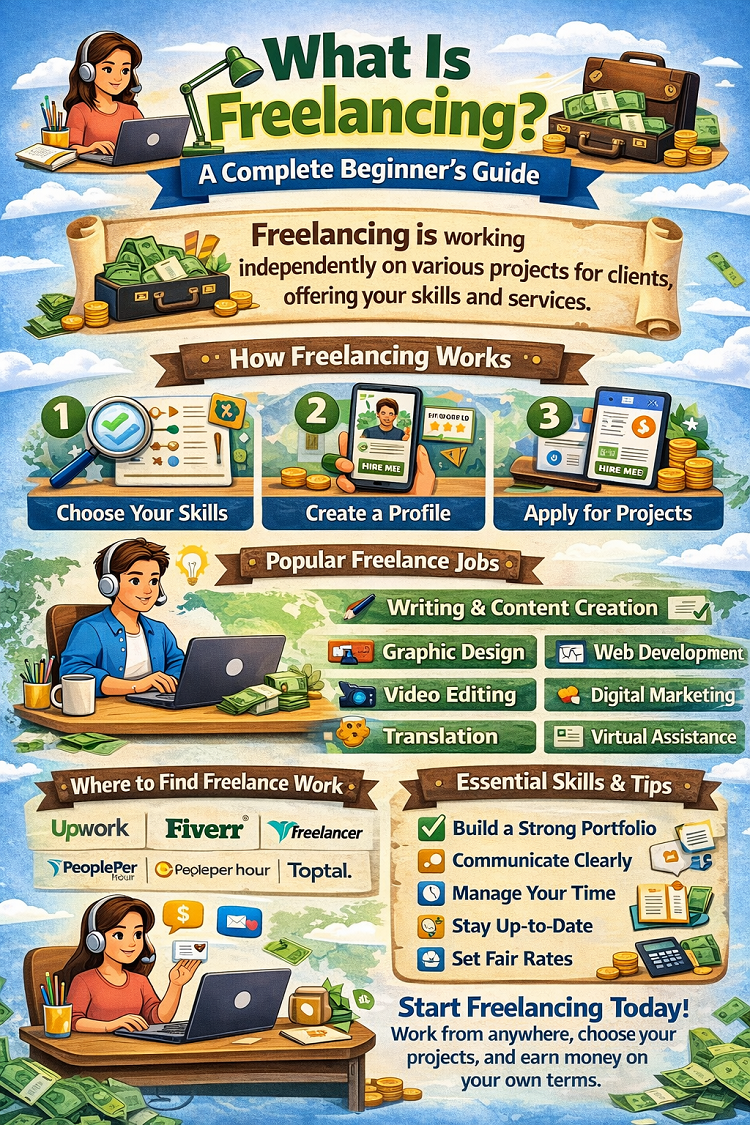
What Is Freelancing? A Complete Beginner’s Guide
In today’s fast-changing digital world, freelancing has become one of the most popular ways to earn money online. Whether you want to escape the traditional 9-to-5 job, earn extra income, or work from home, freelancing offers flexibility, independence, and unlimited earning potential.
But what exactly is freelancing? How does it work? And how can beginners get started? This complete guide will answer all your questions in detail.
What Is Freelancing?
Freelancing is a type of self-employment where an individual offers services to clients on a project or contract basis instead of working as a full-time employee for one company.
A freelancer is essentially their own boss. They can choose:
- The type of work they want to do
- The clients they want to work with
- Their working hours
- Their rates
Freelancers usually work remotely and communicate with clients through the internet.
How Freelancing Works
Freelancing is simple in concept but powerful in practice. Here’s how it typically works:
- You have a skill (writing, designing, programming, etc.)
- You find clients who need that skill
- You complete the work
- You get paid for your services
Freelancers can work on:
- Short-term projects (one-time tasks)
- Long-term contracts (ongoing work)
- Hourly or fixed-price jobs
Popular Freelancing Skills
One of the best things about freelancing is that there are opportunities for almost every skill level. Here are some of the most in-demand freelancing skills:
1. Writing & Content Creation
- Blog writing
- Copywriting
- Article writing
- SEO content
2. Graphic Design
- Logo design
- Social media posts
- Branding materials
3. Web Development
- Website creation
- WordPress development
- E-commerce stores
4. Digital Marketing
- SEO (Search Engine Optimization)
- Social media marketing
- Email marketing
5. Video Editing
- YouTube videos
- Reels and short videos
- Promotional content
6. Data Entry
- Typing work
- Data organization
- Spreadsheet management
Benefits of Freelancing
Freelancing offers many advantages, especially for beginners looking to start earning online.
1. Work from Anywhere
You can work from home, a café, or even while traveling.
2. Flexible Schedule
Freelancers choose their own working hours, making it ideal for students and part-time workers.
3. Unlimited Income Potential
Unlike fixed salaries, freelancers can increase their income by:
- Taking more projects
- Increasing rates
- Improving skills
4. Be Your Own Boss
You don’t have a manager controlling your schedule. You make your own decisions.
5. Skill Development
Freelancing helps you learn real-world skills quickly.
Disadvantages of Freelancing
While freelancing has many benefits, it also comes with challenges.
1. No Fixed Income
Income can vary from month to month.
2. Finding Clients Can Be Hard
Beginners often struggle to get their first job.
3. No Job Security
There is no guarantee of long-term work.
4. Time Management Issues
You must manage your own schedule and deadlines.
How to Start Freelancing as a Beginner
Starting freelancing may feel overwhelming, but if you follow the right steps, it becomes much easier.
Step 1: Identify Your Skills
Start by identifying what you are good at. Ask yourself:
- What skills do I already have?
- What can I learn quickly?
If you don’t have a skill yet, don’t worry—you can learn online for free.
Step 2: Learn and Improve
Before offering services, improve your skills by:
- Watching tutorials
- Practicing daily
- Taking free online courses
Step 3: Create a Portfolio
A portfolio is a collection of your work that shows your skills.
Examples:
- Writers: sample articles
- Designers: logos and designs
- Developers: websites
Even if you don’t have real clients, create sample work.
Step 4: Join Freelancing Platforms
Freelancing platforms help you connect with clients. Some popular ones include:
- Upwork
- Fiverr
- Freelancer
Create a professional profile with:
- A clear description
- Your skills
- Portfolio samples
Step 5: Start Applying for Jobs
Apply for jobs that match your skills. When applying:
- Write a personalized proposal
- Explain how you can help
- Keep it short and clear
Step 6: Deliver Quality Work
Once you get a project:
- Understand client requirements
- Meet deadlines
- Communicate clearly
Good work leads to repeat clients and positive reviews.
Step 7: Build Your Reputation
Reputation is everything in freelancing. To grow:
- Ask for client feedback
- Maintain professionalism
- Deliver consistent quality
Tips for Freelancing Success
Here are some powerful tips to help you succeed faster:
1. Start Small
Don’t aim for big projects immediately. Start with small jobs to gain experience.
2. Be Patient
Getting your first client may take time. Don’t give up.
3. Keep Learning
The online world changes fast. Keep upgrading your skills.
4. Communicate Clearly
Good communication builds trust with clients.
5. Set Realistic Rates
Don’t overprice as a beginner, but don’t work for extremely low rates either.
Freelancing vs Job: What’s Better?
| Feature | Freelancing | Job |
|---|---|---|
| Income | Variable | Fixed |
| Flexibility | High | Low |
| Job Security | Low | High |
| Growth | Unlimited | Limited |
Freelancing is ideal for those who value freedom and flexibility, while jobs provide stability.
Common Mistakes Beginners Make
Avoid these mistakes when starting:
- Not learning a skill properly
- Sending copy-paste proposals
- Ignoring client instructions
- Missing deadlines
- Expecting quick success
Is Freelancing Safe?
Yes, freelancing is safe if you follow proper precautions:
- Use trusted platforms
- Avoid clients who ask for free work
- Never pay to get a job
- Keep communication professional
How Much Can You Earn from Freelancing?
Your income depends on:
- Your skills
- Experience
- Time invested
Example:
- Beginner: $50–$200/month
- Intermediate: $300–$1000/month
- Expert: $2000+ per month
With consistency, freelancing can become a full-time income source.
Future of Freelancing
Freelancing is growing rapidly worldwide. Companies are increasingly hiring remote workers instead of full-time employees.
This means:
- More opportunities
- More competition
- Higher demand for skilled freelancers
Conclusion
Freelancing is one of the best ways to earn money online, especially for beginners who want to work independently. It offers flexibility, freedom, and the potential to build a successful career without needing a traditional job.
However, success in freelancing requires patience, dedication, and continuous learning. Start with a skill, build your portfolio, find clients, and focus on delivering high-quality work.
