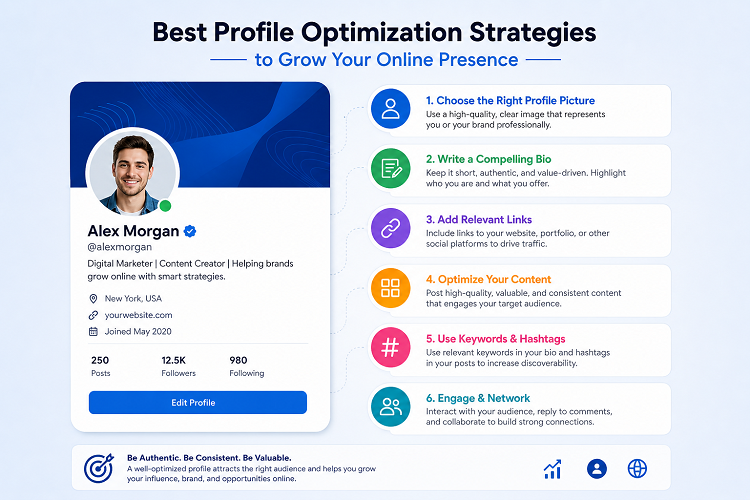
Profile optimization is no longer optional in a digital-first world it is a necessity. Whether you are a professional, freelancer, entrepreneur, or content creator, your online profile acts as your digital identity. It represents your skills, personality, credibility, and value in a space where attention spans are short and competition is intense.
A well-optimized profile does more than just look good. It works strategically to attract the right audience, communicate your expertise, and convert visitors into followers, clients, or employers. This guide provides a deep, structured, and semantically optimized understanding of profile optimization, focusing only on relevant, practical, and actionable insights.
Understanding Profile Optimization
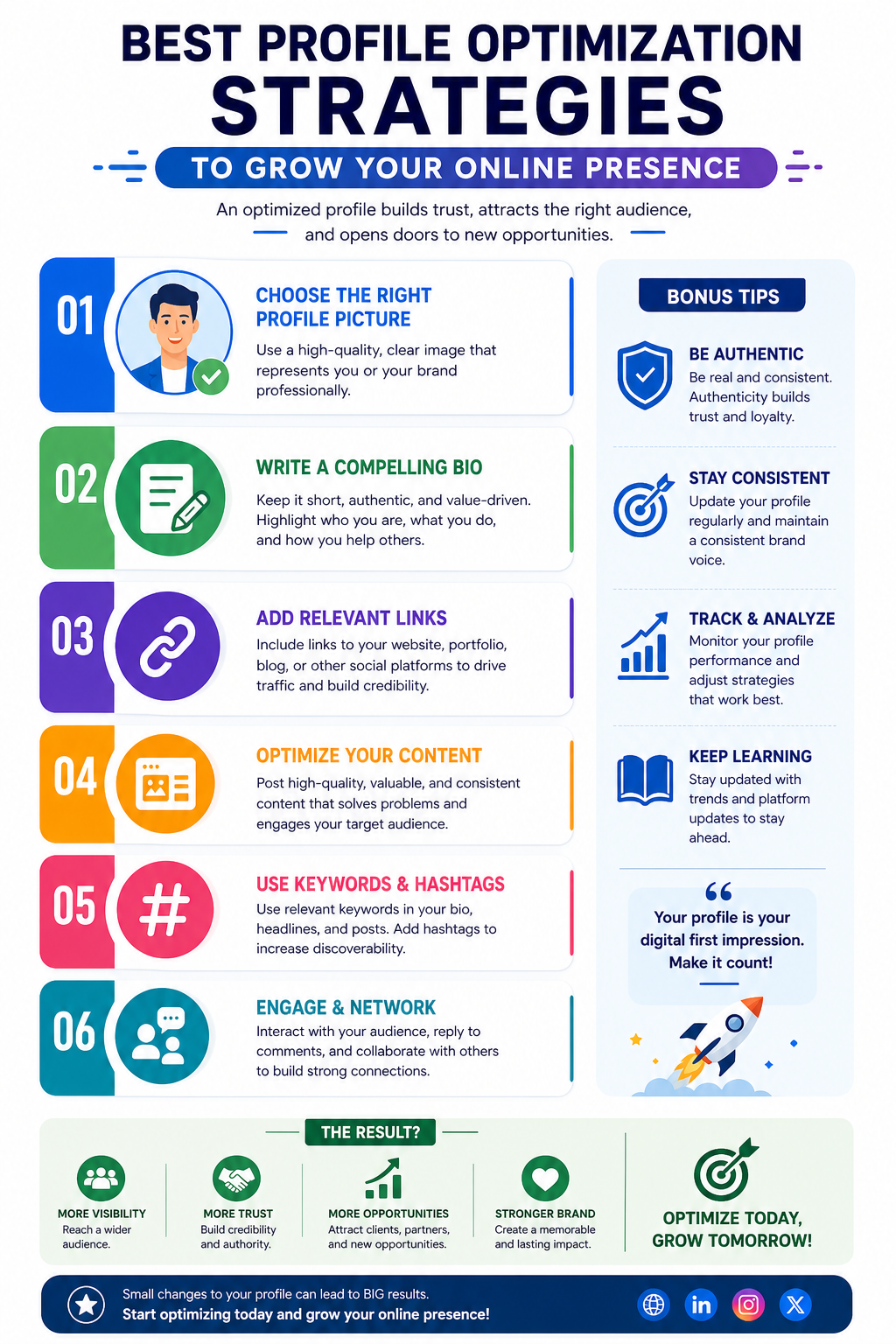
Profile optimization is the deliberate process of refining every element of your online profile to maximize visibility, clarity, and engagement. It combines principles of personal branding, search engine optimization (SEO), user psychology, and content strategy.
At its core, profile optimization answers three essential questions:
Who are you?
What do you offer?
Why should someone care?
If your profile fails to answer these questions quickly and clearly, it will not perform effectively—no matter how visually appealing it is.
The Strategic Importance
The importance of profile optimization goes beyond aesthetics. It directly impacts how discoverable and credible you are online.
A strong profile improves your chances of appearing in search results within platforms and search engines. This is especially critical on platforms like LinkedIn, freelancing marketplaces, and social media channels where algorithms prioritize optimized content.
Beyond visibility, optimization builds trust. When users land on a well-structured, professional profile, they are more likely to perceive you as credible and knowledgeable. This trust becomes the foundation for engagement and conversion.
Another critical aspect is alignment. An optimized profile ensures that the audience you attract is relevant to your goals. Without optimization, you may gain visibility—but not from the right people.
Core Components
Every high-performing profile is built on several key components. Each of these elements must work together cohesively rather than independently.
Profile Picture Visual Identity and Trust
Your profile picture is often the first element people notice. It silently communicates professionalism, confidence, and authenticity.
A strong profile image should be clear, well-lit, and aligned with your purpose. For professional platforms, a clean headshot with a neutral background is ideal. For creative platforms, you may incorporate branding elements, but clarity should never be compromised.
Consistency also matters. Using the same or similar image across platforms strengthens recognition and reinforces your personal brand.
Searchability and Consistency
Your username plays a crucial role in discoverability. It should be simple, memorable, and consistent across platforms whenever possible.
Complex usernames with random numbers or symbols reduce credibility and make it harder for people to find you. A clean, professional handle increases both trust and accessibility.
Immediate Value Communication
Your headline is one of the most critical components of your profile. It appears in search results and determines whether someone clicks on your profile.
An effective headline clearly communicates your role, expertise, and value. It should be concise but informative, avoiding vague terms like “enthusiast” or “dreamer” unless supported by context.
Strong headlines focus on outcomes rather than just titles. Instead of simply stating your job, they highlight what you help others achieve.
Bio or About Section
The bio section is where you expand your story and establish your authority. This is not a place for generic statements it is where you differentiate yourself.
A well-crafted bio should begin with clarity, immediately explaining who you are and what you do. It should then transition into the value you provide, the audience you serve, and the results you deliver.
Including measurable achievements or specific expertise strengthens credibility. However, the tone should remain natural and human rather than overly formal or robotic.
Clarity is more important than complexity. If a reader has to guess what you do, your bio is not effective.
Keyword Optimization
Keywords are essential for making your profile discoverable. Platforms use keywords to match profiles with search queries, making them a critical part of optimization.
Effective keyword usage involves naturally integrating relevant terms into your headline, bio, and other sections. These keywords should reflect your skills, industry, and services.
Overusing keywords can harm readability and reduce trust. The goal is balance—ensuring your profile is both searchable and engaging.
Contact Information
An optimized profile makes it easy for people to take the next step. Whether that step is contacting you, visiting your website, or exploring your work, accessibility is key.
Your contact information should be clear, accurate, and up to date. Broken links or outdated details create friction and can lead to missed opportunities.
Guiding User Behavior
Many profiles fail because they do not guide visitors toward action. A call-to-action (CTA) provides direction and increases conversion.
A strong CTA is clear and specific. Instead of vague phrases, it tells users exactly what to do next—whether it is contacting you, viewing your portfolio, or following your account.
Without a CTA, even an optimized profile may fail to deliver results.
Content Activity and Ongoing Optimization
Profile optimization is not a one-time task. It requires continuous updates and activity.
Regularly sharing relevant content enhances your credibility and keeps your profile active. It signals to both users and algorithms that you are engaged and current.
Updating your profile periodically ensures that it reflects your latest skills, achievements, and goals. An outdated profile can undermine even the strongest initial impression.
Platform Specific Optimization Considerations
Different platforms require different optimization strategies. While the core principles remain the same, the execution varies.
On professional platforms, the focus should be on credibility, expertise, and measurable achievements. On social platforms, personality and engagement play a larger role.
Freelancing platforms require clarity in services, strong portfolio presentation, and client-focused language. Each platform has its own algorithm and audience expectations, making customization essential.
The Role of Personal Branding in Profile Optimization
Profile optimization and personal branding are deeply interconnected. Your profile is not just a collection of information—it is a representation of your brand.
A strong personal brand is consistent, authentic, and clearly defined. It communicates your values, expertise, and unique perspective.
Consistency across platforms strengthens your brand identity. This includes visual elements, tone of voice, and messaging.
When your profile aligns with your brand, it becomes more memorable and impactful.
Common Mistakes That Undermine Profile Optimization
Many profiles fail not because of a lack of effort, but because of avoidable mistakes.
One of the most common issues is lack of clarity. If your profile does not clearly explain what you do, users will lose interest quickly.
Another major mistake is incomplete information. Missing sections reduce both credibility and visibility.
Overloading profiles with keywords is also problematic. It makes content difficult to read and reduces authenticity.
Poor-quality visuals can create a negative first impression, while the absence of a call-to-action limits conversions.
Avoiding these mistakes is just as important as implementing best practices.
Advanced Profile Optimization Strategies
Once the basics are in place, advanced strategies can further enhance performance.
Using analytics allows you to track how your profile is performing and identify areas for improvement. Metrics such as profile views, engagement rates, and conversion rates provide valuable insights.
A/B testing different headlines, bios, or CTAs can help determine what resonates most with your audience.
Incorporating social proof such as testimonials, endorsements, or case studies—adds credibility and builds trust.
Storytelling is another powerful technique. Profiles that tell a clear, compelling story are more engaging and memorable than those that simply list facts.
Profile Optimization for Search Engines
| Element | Optimization Tip | Benefit |
|---|---|---|
| Username / Handle | Use your real name or brand name | Improves search visibility |
| Profile Title | Add primary keyword (e.g., “Digital Marketer”) | Helps ranking in search results |
| Bio / Description | Include relevant keywords naturally | Better discoverability |
| Profile Picture | Use a clear, professional image | Builds trust & credibility |
| Custom URL | Optimize with name or brand (no random numbers) | Easier indexing by search engines |
| Links (Website etc.) | Add relevant, working links | Drives traffic & authority |
| Content Keywords | Use keywords in posts & captions | Boosts content reach |
Optimizing your profile for search engines extends your reach beyond individual platforms.
This involves using relevant keywords, maintaining updated content, and including links to credible sources or personal websites.
Search engines prioritize profiles that are active, relevant, and well-structured. By aligning your profile with SEO principles, you increase your chances of being discovered organically.
Long Term Benefits of Profile Optimization
The impact of profile optimization is cumulative. Over time, a well-optimized profile leads to increased visibility, stronger connections, and more opportunities.
It enhances your professional reputation and positions you as an authority in your field. It also improves the quality of interactions you receive, as your profile attracts a more relevant audience.
Ultimately, profile optimization is an investment in your digital future.
Frequently Asked Questions (FAQs)
What is profile optimization?
Profile optimization is the process of improving your online profile to increase visibility, credibility, and engagement while clearly communicating your value.
How long does it take to optimize a profile?
Initial optimization can take a few hours, but ongoing improvements should be made regularly as your goals and experience evolve.
Do keywords really matter in profiles?
Yes, keywords are essential for searchability. They help platforms and search engines understand what your profile is about.
Can profile optimization help me get clients or a job?
A well-optimized profile increases your chances of attracting the right opportunities by making your value clear and accessible.
How often should I update my profile?
You should review your profile every few months or after any major change in your career or skills.
Is a professional profile picture necessary?
Yes, a high-quality profile picture significantly improves first impressions and builds trust.
What is the most important part of a profile?
The headline and bio are the most critical because they communicate your value and determine whether users engage further.
Should I use the same profile on every platform?
Consistency is important, but each profile should be adapted to the platform’s audience and format.
Reference Links
https://blog.hubspot.com/marketing/linkedin-profile-tips
https://neilpatel.com/blog/social-media-profile-optimization/
https://sproutsocial.com/insights/social-media-profile/
https://moz.com/beginners-guide-to-seo
https://www.linkedin.com/help/linkedin/answer/profile-optimization
