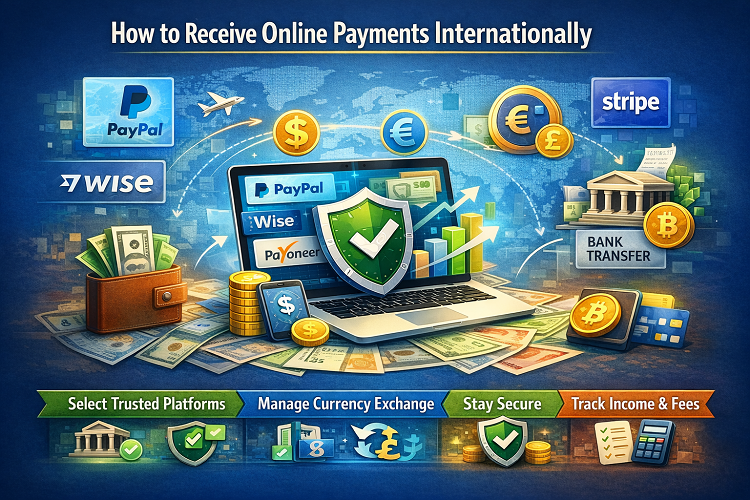
How to Receive Online Payments Internationally
In today’s global digital economy, working with international clients is no longer limited to big corporations. Freelancers, bloggers, eCommerce sellers, and remote workers can easily earn money from clients across the world. However, one of the biggest challenges beginners face is how to receive online payments internationally in a safe, fast, and cost-effective way.
This comprehensive guide will walk you through everything you need to know from popular payment methods to setup tips, fees, and security practices so you can confidently receive payments from anywhere in the world.
Why Receiving International Payments Matters
With the rise of freelancing, remote jobs, and online businesses, cross-border payments have become essential.
Who needs international payments?
- Freelancers working with global clients
- Bloggers earning from ads and affiliates
- eCommerce sellers shipping worldwide
- Remote employees
- Digital service providers
Being able to accept international payments opens doors to:
- Higher-paying clients
- Global opportunities
- Business growth
Challenges of Receiving International Payments
Before we explore solutions, it’s important to understand common challenges:
1. High Transaction Fees
Many platforms charge fees for currency conversion and transfers.
2. Currency Exchange Issues
Exchange rates can affect how much money you actually receive.
3. Limited Availability
Some services are not available in all countries.
4. Payment Delays
International transfers can take several days.
5. Security Risks
Fraud and scams are common if you use untrusted platforms.
Best Methods to Receive International Payments
Let’s explore the most reliable and widely used methods.
1. PayPal
PayPal is one of the most popular and trusted platforms for international payments.
Features:
- Available in many countries
- Easy to use
- Supports multiple currencies
How it works:
- Create an account
- Link your bank account or card
- Share your email with clients
- Receive payments instantly
Pros:
- Fast transactions
- Widely accepted
- Buyer and seller protection
Cons:
- High fees
- Currency conversion charges
2. Payoneer
Payoneer is especially popular among freelancers and online workers.
Features:
- Receive payments from international companies
- Get virtual bank accounts (US, UK, EU)
- Withdraw directly to local bank
Best for:
- Freelancers
- Amazon sellers
- Upwork users
Pros:
- Lower fees than PayPal
- Supports multiple currencies
Cons:
- Annual account fee (in some cases)
3. Wise (formerly TransferWise)
Wise is known for its transparent and low-cost transfers.
Features:
- Real exchange rates
- Multi-currency accounts
- Fast transfers
Pros:
- Low fees
- Transparent pricing
- Reliable
Cons:
- Not supported in all countries fully
4. Skrill
Skrill is another digital wallet used for international transactions.
Features:
- Send and receive money
- Supports multiple currencies
Pros:
- Fast payments
- Easy setup
Cons:
- Fees can be high
- Less popular than PayPal
5. Stripe
Stripe is widely used by online businesses and developers.
Features:
- Accept payments via cards
- Integration with websites
- Subscription billing
Best for:
- eCommerce stores
- SaaS businesses
Pros:
- Powerful features
- Professional solution
Cons:
- Requires technical setup
- Not available in all countries
6. Direct Bank Transfers (SWIFT)
Traditional bank transfers are still widely used.
How it works:
- Client sends money directly to your bank account
- Uses SWIFT/BIC codes
Pros:
- Secure
- No third-party platform needed
Cons:
- Slow (3–7 days)
- High fees
7. Cryptocurrency Payments
Cryptocurrency is becoming a modern option for global payments.
Popular options:
- Bitcoin
- Ethereum
- USDT (stablecoins)
Pros:
- Fast transfers
- Low fees
- No bank required
Cons:
- Price volatility
- Not accepted everywhere
Choosing the Right Payment Method
The best method depends on your needs.
For freelancers:
- Payoneer
- PayPal
For businesses:
- Stripe
- Wise
For low fees:
- Wise
- Cryptocurrency
For beginners:
- PayPal (easy to start)
How to Set Up Your Payment System
Step 1: Choose a Platform
Select based on your location and needs.
Step 2: Create an Account
Provide:
- Name
- Phone number
Step 3: Verify Identity
Most platforms require:
- ID verification
- Address proof
Step 4: Link Bank Account
Connect your local bank to withdraw funds.
Step 5: Share Payment Details
Send your:
- Email (PayPal)
- Account details (Payoneer/Wise)
Understanding Fees
Different platforms charge different fees.
Common types:
- Transaction fees
- Currency conversion fees
- Withdrawal fees
Tip:
Always check fee structure before choosing a platform.
Currency Conversion Tips
To avoid losing money:
- Use platforms with real exchange rates (like Wise)
- Avoid unnecessary conversions
- Receive payments in strong currencies (USD, EUR)
Security Tips for Receiving Payments
1. Use Trusted Platforms
Never use unknown apps.
2. Enable Two-Factor Authentication
Adds extra security to your account.
3. Verify Clients
Avoid working with suspicious clients.
4. Avoid Overpayments
Scammers may send extra money and ask for refunds.
5. Keep Records
Maintain invoices and transaction history.
Common Mistakes to Avoid
1. Choosing the Wrong Platform
Not all platforms work well in every country.
2. Ignoring Fees
Small fees can add up over time.
3. Not Verifying Accounts
Unverified accounts may have limits.
4. Delaying Withdrawals
Exchange rates may change and reduce your value.
Best Practices for Smooth Payments
- Always send professional invoices
- Agree on payment terms before starting work
- Use milestones for large projects
- Communicate clearly with clients
Future of International Payments
The future of global payments is evolving rapidly.
Trends include:
- Faster digital payments
- Blockchain technology
- Lower transaction costs
- More global accessibility
This means receiving international payments will become even easier in the coming years.
Conclusion
Receiving online payments internationally is no longer complicated, but choosing the right method is crucial. Platforms like PayPal, Payoneer, and Wise make it simple for freelancers and businesses to work with clients worldwide.
