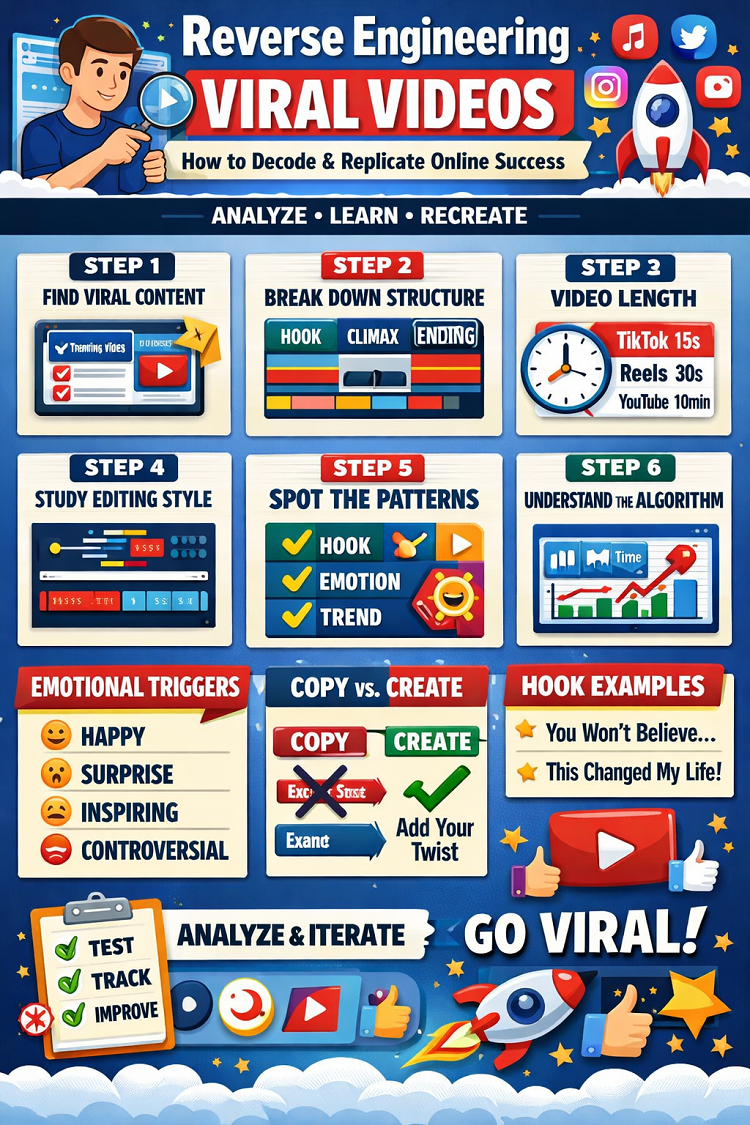
Reverse Engineering Viral Videos
In today’s digital world, viral videos have become one of the most powerful tools for gaining attention, building a brand, and even generating income. Whether it’s a funny clip, an emotional story, or a trending challenge, viral videos dominate platforms like YouTube, TikTok, Instagram, and Facebook. But what makes a video go viral? Is it luck, timing, or a secret formula?
The truth is, viral content is not purely accidental. Many successful creators use a strategy known as reverse engineering viral videos. This method involves analyzing popular content, identifying patterns, and applying those insights to create your own high-performing videos.
In this comprehensive guide, we will break down everything you need to know about reverse engineering viral videos from understanding virality to step-by-step strategies you can apply immediately.
What Does “Reverse Engineering Viral Videos” Mean?
Simple Explanation Table
| Aspect | Explanation |
|---|---|
| Meaning | Studying viral videos to understand why they succeed |
| Goal | Learn proven strategies instead of guessing |
| Process | Analyze → Learn → Recreate |
| Focus | Hook, content style, emotion, timing |
| Outcome | Create videos with higher chances of going viral |
Reverse engineering viral videos means studying already successful videos to understand why they performed well. Instead of guessing what might work, you analyze proven content and replicate its structure, style, and emotional impact.
It involves:
- Breaking down video elements (hook, storytelling, visuals, timing)
- Identifying audience psychology
- Understanding platform algorithms
- Recreating similar content with your unique twist
Think of it as learning from winners instead of starting from scratch.
Why Reverse Engineering Works
Many beginners struggle because they try to be “original” without understanding what works. Reverse engineering helps you:
1. Reduce Guesswork
You’re not blindly experimenting you’re using proven formulas.
2. Learn Faster
Instead of years of trial and error, you learn in weeks by studying top creators.
3. Increase Chances of Virality
By following patterns that already succeeded, your probability of going viral increases.
4. Understand Audience Behavior
You learn what people like, share, and engage with.
The Psychology Behind Viral Videos

To reverse engineer viral content effectively, you must understand why people share videos.
Emotional Triggers
Most viral videos trigger strong emotions:
- Happiness (funny clips)
- Surprise (unexpected twists)
- Inspiration (motivational stories)
- Anger or controversy (debates)
Relatability
People share content that reflects their own life experiences.
Social Currency
Sharing viral content makes people feel “in the know” or trendy.
Simplicity
Viral videos are easy to understand within seconds.
Step-by-Step Process to Reverse Engineer Viral Videos
Let’s break this down into a practical system you can follow.
Step 1: Find Viral Videos in Your Niche
Start by identifying content that is already performing well.
Where to Look:
- YouTube Trending Page
- TikTok “For You” page
- Instagram Reels Explore section
- Facebook Watch
What to Search:
Use keywords related to your niche, such as:
- “viral prank videos”
- “motivational reels trending”
- “funny clips 2026”
What to Analyze:
Pick videos with:
- High views (100K+ or millions)
- Strong engagement (likes, comments, shares)
Step 2: Break Down the Video Structure
Every viral video follows a structure. Analyze it carefully.
1. The Hook (First 3 5 Seconds)
This is the most important part.
Ask:
- Does it grab attention instantly?
- Does it create curiosity?
Examples:
- “You won’t believe what happened next…”
- “This changed my life in 24 hours…”
2. The Build-Up
This is where the story develops.
Look for:
- Suspense
- Emotional connection
- Problem introduction
3. The Climax
The most impactful moment of the video.
Ask:
- Is there a twist?
- Is it satisfying or shocking?
4. The Ending
Good viral videos often:
- Encourage sharing
- Leave a lasting impression
- Loop seamlessly (especially on TikTok)
Step 3: Analyze Video Length and Timing
Different platforms favor different lengths:
- TikTok: 7–30 seconds
- Instagram Reels: 10–45 seconds
- YouTube Shorts: under 60 seconds
- Long-form YouTube: 8–15 minutes
Look at:
- Average watch duration
- Where people drop off
- Whether the video loops
Step 4: Study the Editing Style
Editing plays a huge role in virality.
Key Elements:
- Fast cuts (no boring moments)
- Subtitles (very important)
- Zoom effects
- Background music
- Sound effects
Why It Matters:
Modern audiences have short attention spans. Fast, engaging editing keeps viewers watching.
Step 5: Identify Patterns Across Multiple Videos
Pattern Identification Table
| Pattern Category | What to Look For | Example | Why It Works |
|---|---|---|---|
| Hook Style | How videos start (question, shock, bold claim) | “Stop scrolling!” / “You won’t believe this…” | Grabs attention instantly |
| Video Format | Structure type (story, reaction, tutorial) | Before & After, POV, Storytelling | Easy for viewers to follow |
| Emotion Trigger | Feeling the video creates | Funny, emotional, shocking | Increases shares |
| Video Length | Duration of viral videos | 10–30 sec (short-form) | Matches audience attention span |
| Editing Style | Cuts, subtitles, effects | Fast cuts, captions | Keeps engagement high |
| Music/Sound | Background audio used | Trending TikTok sound | Boosts reach via algorithm |
| Topic Theme | Common subjects | Money tips, pranks, motivation | High audience interest |
| CTA (Call-to-Action) | Engagement prompts | “Follow for more” | Increases interaction |
| Thumbnail/Visual Style | Colors, faces, expressions | Bright colors, shocked face | Improves click rate |
| Posting Timing | When videos are uploaded | Evening or peak hours | More initial engagement |
Don’t analyze just one video study at least 10–20.
Look for repeating patterns:
- Similar hooks
- Same video format
- Common emotions
- Repeated topics
Example:
If multiple viral videos in your niche start with a question, that’s a pattern you should use.
Step 6: Understand the Algorithm

Each platform has its own algorithm, but the core factors are similar:
Key Ranking Signals:
- Watch time
- Engagement (likes, comments, shares)
- Click-through rate
- Retention rate
Important Insight:
A video goes viral when people:
- Watch it fully
- Rewatch it
- Share it with others
Step 7: Recreate (Don’t Copy) the Video
This is where most people go wrong.
What You Should Do:
- Use the same structure
- Apply similar storytelling
- Use the same emotional triggers
What You Should NOT Do:
- Copy exact content
- Steal ideas without adding value
Add Your Unique Twist:
- Change the setting
- Add humor or personality
- Improve quality
Step 8: Optimize Title, Thumbnail, and Caption
Even the best video can fail without proper packaging.
Titles:
- Create curiosity
- Keep it simple
- Use emotional words
Thumbnails:
- Bright colors
- Clear subject
- Facial expressions
Captions:
- Add keywords
- Include hashtags
- Encourage engagement
Step 9: Test and Iterate
Virality is not guaranteed. You need to experiment.
What to Do:
- Post consistently
- Try different formats
- Analyze results
Track Metrics:
- Views
- Watch time
- Engagement rate
Improve Based on Data:
If a video performs well, create more similar content.
Common Viral Video Formats You Can Reverse Engineer
Here are some proven formats:
1. Before & After Videos
Transformation content always performs well.
2. Storytelling Videos
Short stories with emotional impact.
3. Reaction Videos
Reacting to trending content.
4. Educational Quick Tips
Short, valuable information.
5. Challenges and Trends
Participating in viral trends.
Tools to Help You Reverse Engineer Viral Content
Analytics Tools:
- YouTube Analytics
- TikTok Insights
- Instagram Insights
Research Tools:
- Google Trends
- Keyword tools
Editing Tools:
- CapCut
- Adobe Premiere Pro
- Final Cut Pro
Mistakes to Avoid
1. Copying Instead of Learning
Always add originality.
2. Ignoring the Hook
If your first 3 seconds are weak, the video will fail.
3. Overcomplicating Content
Simple videos often perform better.
4. Posting Without Strategy
Consistency and analysis are key.
Real-Life Example of Reverse Engineering
Let’s say a viral video shows:
- A person starting broke
- Working hard
- Achieving success
Reverse Engineering Steps:
- Identify emotional journey (struggle → success)
- Use similar storytelling structure
- Add your own story or niche twist
- Improve visuals and editing
Result: A fresh but familiar video that resonates with viewers.
How Long Does It Take to Go Viral?
There is no fixed timeline.
- Some videos go viral in hours
- Others take weeks or months
Key Factors:
- Consistency
- Content quality
- Audience engagement
Advanced Strategies for Virality
1. Use Trends Early
Jump on trends before they peak.
2. Collaborate with Creators
Reach new audiences.
3. Use Strong Calls-to-Action
Ask viewers to like, share, or comment.
4. Create Series Content
Keep viewers coming back.
Final Thoughts
Reverse engineering viral videos is one of the smartest strategies for success in today’s content-driven world. Instead of relying on luck, you use data, psychology, and proven patterns to increase your chances of going viral.
