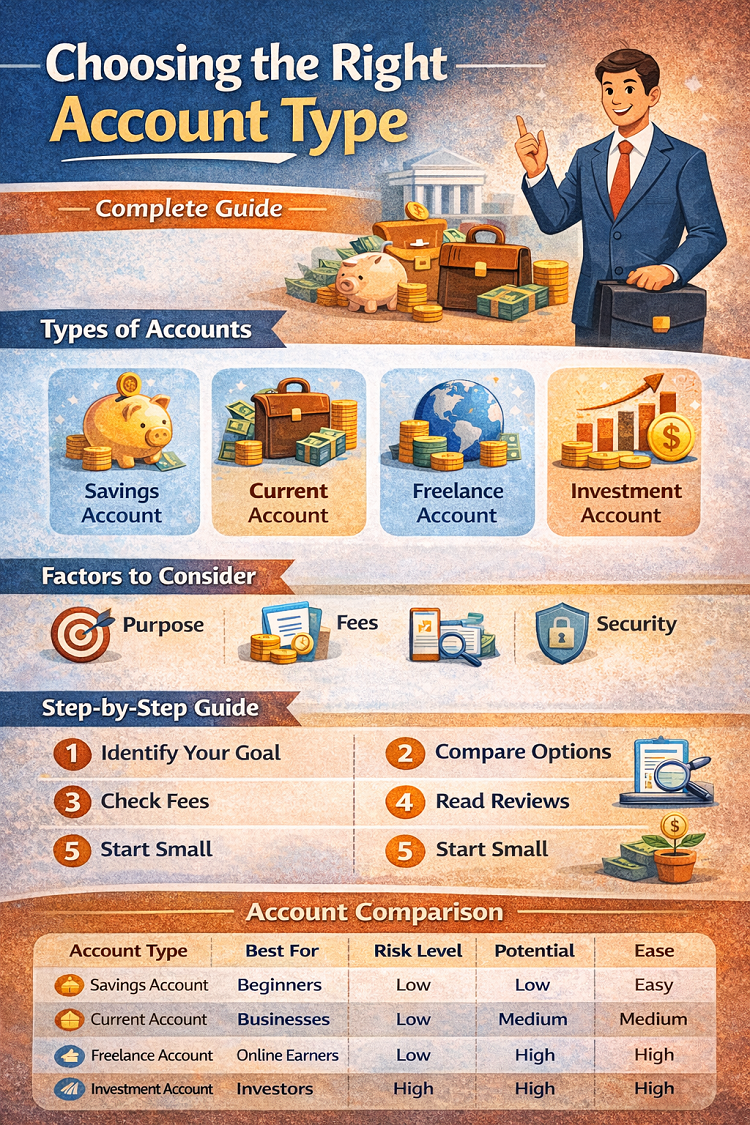
Choosing the Right Account Type
Choosing the right account type is one of the most important decisions you can make when managing your finances or starting an online earning journey. Whether you are opening a bank account, signing up for a freelancing platform, or creating a trading account, the type of account you choose can directly impact your income, convenience, and long-term success.
In this detailed guide, we will explore everything you need to know about choosing the right account type, including different options, their features, advantages, and how to select the best one based on your needs.
What Does “Account Type” Mean?
An account type refers to the category of account you open based on your purpose. Each account type is designed for specific needs, such as saving money, making transactions, investing, or receiving payments.
For example:
- A savings account is for storing money
- A current account is for business transactions
- A freelance account is for earning online
Why Choosing the Right Account Type is Important
📊 Impact of Choosing the Right vs Wrong Account
| Factor | Right Account Choice ✅ | Wrong Account Choice ❌ |
|---|---|---|
| Fees | Low or manageable charges | High and unnecessary fees |
| Convenience | Easy access and smooth transactions | Difficult and time-consuming |
| Features | Useful tools and benefits | Limited or irrelevant features |
| Growth Opportunities | Helps increase savings/income | Limits financial growth |
| Security | Strong protection and safety | Risk of fraud or weak security |
| Flexibility | Can adapt to your needs | Hard to upgrade or change |
Selecting the wrong account can lead to:
- Unnecessary fees
- Limited features
- Difficulty in transactions
- Lower returns or benefits
On the other hand, the right account can help you:
- Manage money efficiently
- Save more
- Earn better returns
- Grow your income
Types of Account You Should Know
1. Savings Account
A savings account is the most common type of account used to store money safely while earning a small amount of interest.
Features:
- Interest on balance
- Easy access to funds
- Low risk
Best For:
- Students
- Salaried individuals
- Beginners
2. Current Account
A current account is designed for businesses and people who perform frequent transactions.
Features:
- Unlimited transactions
- No interest (usually)
- Overdraft facility
Best For:
- Business owners
- Traders
- Entrepreneurs
3. Freelance or Digital Payment Accounts
These accounts are used to receive international payments from clients.
Examples include:
- Payoneer
- Wise
- PayPal
Features:
- Global payment support
- Currency conversion
- Easy withdrawals
Best For:
- Freelancers
- Online workers
- Content creators
4. Investment Accounts
These accounts allow you to invest in stocks, crypto, or mutual funds.
Features:
- Potential high returns
- Risk involved
- Requires knowledge
Best For:
- Investors
- Advanced users
5. Business Accounts
Business accounts are specially designed for companies and startups.
Features:
- Business transaction management
- Tax tracking
- Multiple user access
Best For:
- Startups
- Small businesses
- Agencies
Key Factors to Consider When Choosing an Account
1. Purpose of the Account
Ask yourself:
- Do you want to save money?
- Receive payments?
- Run a business?
Your purpose will determine the best account type.
2. Fees and Charges
Different accounts have different fees, such as:
- Monthly maintenance fees
- Transaction charges
- Withdrawal fees
Always choose an account with reasonable costs.
3. Accessibility
Make sure the account is easy to use:
- Mobile app availability
- ATM access
- Online banking
4. Security
Security is very important. Look for:
- Two-factor authentication
- Fraud protection
- Strong encryption
5. International Support
If you work online, ensure the account supports:
- Global payments
- Multiple currencies
Comparison Table (Important Section)
| Account Type | Best For | Risk Level | Income Potential | Ease of Use |
|---|---|---|---|---|
| Savings Account | Beginners | Low | Low | Easy |
| Current Account | Businesses | Low | Medium | Medium |
| Freelance Account | Online Earners | Low | High | Easy |
| Investment Account | Investors | High | High | Complex |
| Business Account | Companies | Medium | High | Medium |
How to Choose the Right Account (Step-by-Step)
Step 1: Identify Your Goal
Decide why you need the account.
Step 2: Compare Options
Research different account types and providers.
Step 3: Check Fees
Avoid accounts with hidden charges.
Step 4: Read Reviews
See what other users say about the account.
Step 5: Start Small
Begin with one account and upgrade later if needed.
Common Mistakes to Avoid
1. Choosing Without Research
Many people open accounts without understanding features.
2. Ignoring Fees
Small fees can become big expenses over time.
3. Using One Account for Everything
It’s better to separate personal, business, and investment accounts.
4. Not Considering Future Needs
Choose an account that can grow with you.
Best Account Setup Strategy (Pro Tip)
A smart approach is to use multiple accounts:
- Savings account → For saving money
- Freelance account → For receiving payments
- Investment account → For growing wealth
This strategy helps you manage finances better.
Tips for Beginners
- Start with a simple savings account
- Add a freelance account if you earn online
- Learn basic finance before investing
- Keep track of transactions
- Always use secure platforms
Future Trends in Account Types
With technology growing, account types are evolving:
- Digital-only banks
- AI-powered financial tools
- Crypto wallets
- Multi-currency accounts
Staying updated with these trends can give you an advantage.
Conclusion
Choosing the right account type is a crucial step in managing your finances and building a successful income stream. Whether you are saving money, running a business, or earning online, selecting the correct account can make your journey easier and more profitable.
