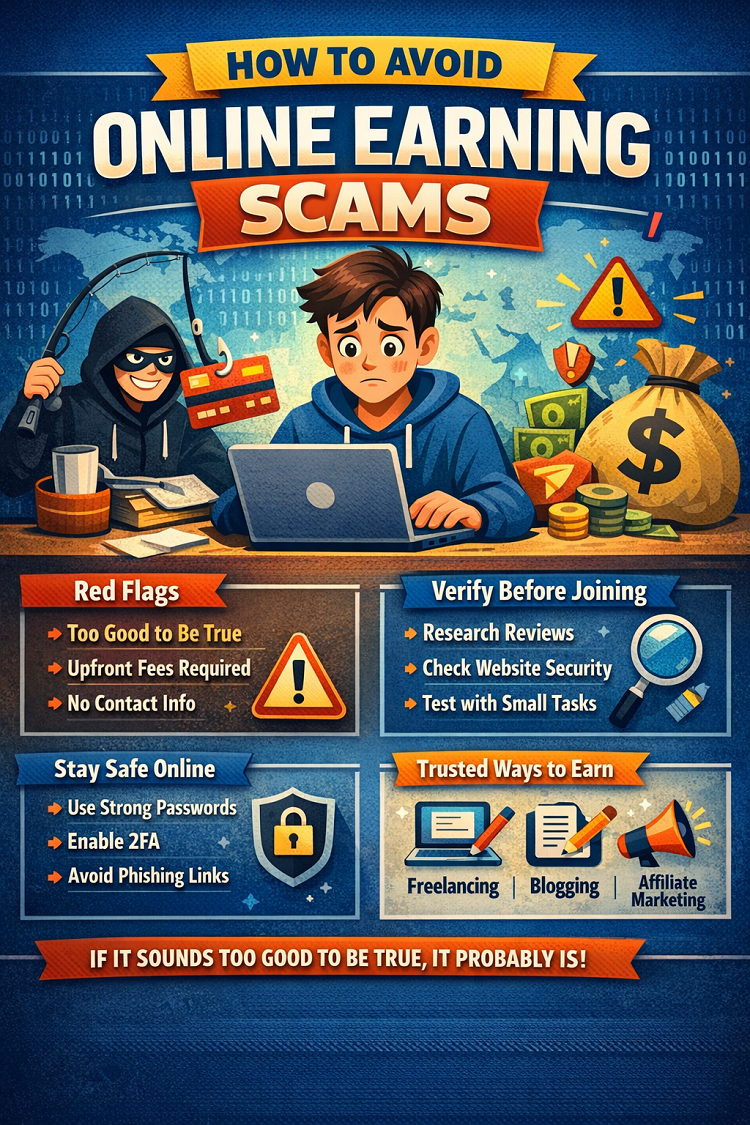
How to Avoid Online Earning Scams
In today’s digital world, earning money online has become easier than ever. From freelancing and blogging to cryptocurrency and affiliate marketing, there are countless legitimate ways to make income from the internet. However, alongside these opportunities, online scams have also increased rapidly. Every day, thousands of people fall victim to fake earning schemes, losing their time, money, and personal information.
If you are serious about making money online, learning how to identify and avoid scams is absolutely essential. This comprehensive guide will help you understand how online earning scams work, the common types of scams, warning signs, and practical steps you can take to stay safe.
What Are Online Earning Scams?
Online earning scams are fraudulent schemes designed to trick people into paying money or sharing sensitive information in exchange for fake income opportunities. These scams often promise quick and easy money with little effort, which attracts beginners who are eager to start earning online.
The scammers use professional-looking websites, fake testimonials, and persuasive marketing tactics to appear legitimate. By the time victims realize the truth, it is often too late.
Why Do People Fall for Online Scams?
Before learning how to avoid scams, it’s important to understand why people fall for them in the first place:
1. Desire for Quick Money
Many people are attracted to offers that promise high income in a short time. Scammers exploit this desire by advertising “get rich quick” schemes.
2. Lack of Knowledge
Beginners who are new to online earning don’t always know what legitimate opportunities look like, making them easy targets.
3. Emotional Manipulation
Scammers often create urgency (e.g., “limited offer” or “only today”) to pressure people into making quick decisions without thinking.
4. Professional Appearance
Fake websites and apps can look very real, with logos, reviews, and even fake payment proofs.
Common Types of Online Earning Scams
Understanding different scam types can help you recognize them quickly.
1. Fake Job Offers
Scammers offer online jobs such as data entry, typing, or simple tasks. They may ask for a “registration fee” or “training fee” before starting work. Once you pay, they disappear.
2. Pyramid and Ponzi Schemes
These schemes require you to invest money and recruit others to earn profits. Eventually, the system collapses, and most participants lose their money.
3. Fake Freelancing Platforms
Some fake websites pretend to offer freelancing jobs but charge membership fees or withdraw money illegally.
4. Phishing Scams
You may receive emails or messages asking for login details or personal information. These are designed to steal your data.
5. Fake Investment Opportunities
Scammers promise high returns in trading, crypto, or forex with “guaranteed profits.” In reality, they take your money and disappear.
6. App-Based Earning Scams
Some mobile apps claim you can earn money by watching ads or completing tasks, but they never allow withdrawals.
Warning Signs of Online Scams
Here are some clear red flags you should never ignore:
1. Unrealistic Income Promises
If a platform promises you thousands of dollars with little or no effort, it is likely a scam.
2. Upfront Payment Requirement
Legitimate earning platforms rarely ask for upfront fees. If you must pay to start earning, be cautious.
3. Lack of Company Information
If a website does not provide clear details like company name, address, or contact information, it’s suspicious.
4. Poor Website Quality
Many scam websites have spelling errors, broken links, or low-quality design.
5. No Payment Proof
If there is no genuine proof of users receiving payments, it could be fake.
6. Pressure Tactics
Scammers often say things like:
- “Offer expires today”
- “Limited seats available”
This is meant to rush your decision.
How to Verify an Online Earning Platform
Before joining any platform, follow these steps:
1. Research the Platform
Search for reviews on Google or YouTube. Look for real user experiences rather than promotional content.
2. Check Domain Age
Newly created websites are more likely to be scams. Older domains are generally more trustworthy.
3. Look for Secure Connection
Ensure the website uses HTTPS (secure connection) to protect your data.
4. Verify Payment Methods
Legitimate platforms usually offer reliable payment methods such as bank transfer, PayPal, or well-known wallets.
5. Test With Small Tasks
If possible, start with small tasks and confirm whether the platform actually pays.
Best Practices to Stay Safe Online
1. Never Share Sensitive Information
Avoid sharing your:
- Passwords
- Bank details
- OTP codes
No legitimate company will ask for these.
2. Use Strong Passwords
Create unique and strong passwords for each platform to prevent hacking.
3. Enable Two-Factor Authentication
This adds an extra layer of security to your accounts.
4. Avoid Unknown Links
Do not click on suspicious links sent via email or social media.
5. Trust Your Instincts
If something feels too good to be true, it probably is.
Real vs Fake: How to Tell the Difference
| Feature | Legitimate Platform | Scam Platform |
|---|---|---|
| Payment | Pays consistently | Delays or never pays |
| Fees | Minimal or none | High upfront fees |
| Transparency | Clear company details | Hidden information |
| Reviews | Mixed but genuine | Fake or overly positive |
| Earnings | Realistic | Unrealistic promises |
Popular Safe Ways to Earn Online
To avoid scams, focus on proven and trusted methods:
1. Freelancing
Offer services like writing, graphic design, or programming on trusted platforms.
2. Blogging
Create content and earn through ads, affiliate marketing, and sponsorships.
3. YouTube
Make videos and earn through ads and brand deals.
4. Affiliate Marketing
Promote products and earn commissions.
5. Online Courses
Sell your knowledge by creating courses.
What to Do If You Get Scammed
If you unfortunately become a victim, take these steps immediately:
1. Stop Further Transactions
Do not send more money, even if they promise refunds.
2. Report the Scam
Report to:
- Local cybercrime authorities
- Online platforms where the scam occurred
3. Change Your Passwords
Secure your accounts to prevent further damage.
4. Inform Others
Sharing your experience can help others avoid the same scam.
Tips for Beginners
If you are new to online earning, keep these tips in mind:
- Start with well-known platforms
- Avoid shortcuts and “easy money” schemes
- Learn skills instead of chasing quick cash
- Be patient—real earning takes time
Final Thoughts
Online earning is a great opportunity, but it comes with risks. Scammers are constantly finding new ways to trick people, especially beginners who are eager to make money quickly.
The key to staying safe is awareness. Always research before joining any platform, avoid offers that sound too good to be true, and never pay upfront without proper verification.
