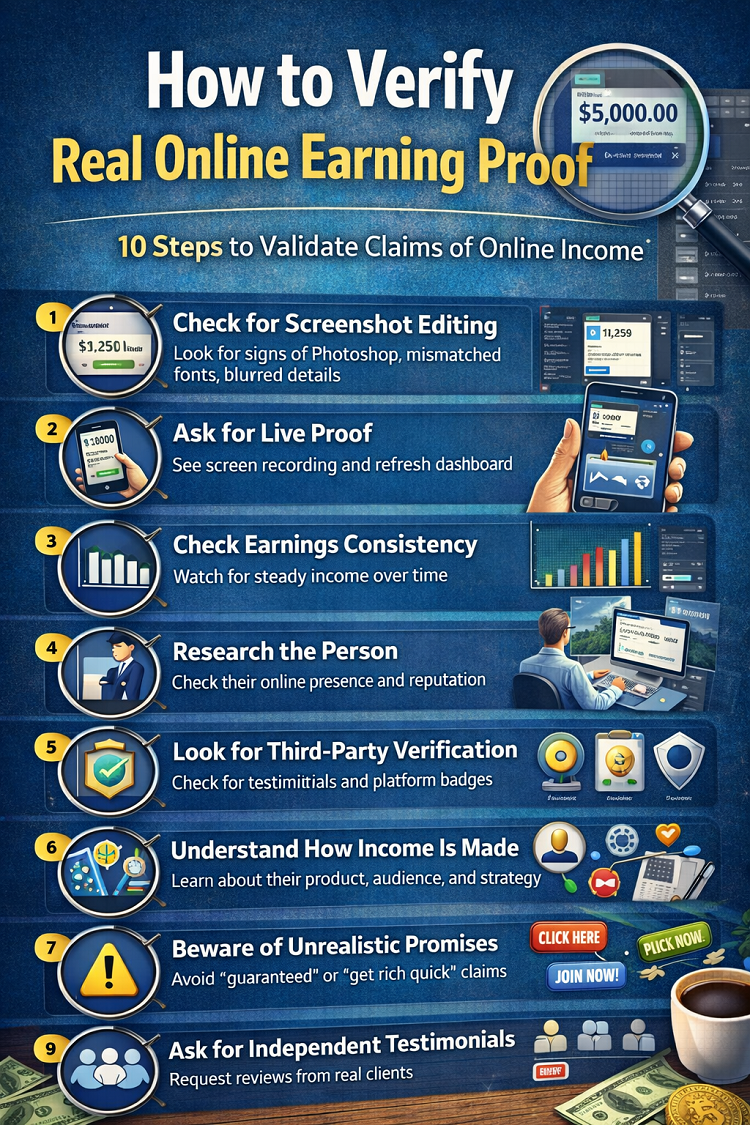
How to Verify Real Online Earning Proof (Complete Guide)
In today’s digital world, social media and online platforms are filled with screenshots, videos, and claims of people earning thousands of dollars online. While many of these are genuine, a large number are fake, exaggerated, or misleading.
If you’re serious about making money online, it’s extremely important to know how to verify real online earning proof. This guide will help you understand what genuine proof looks like, how scammers fake earnings, and how you can protect yourself from being misled.
Why Verifying Online Earning Proof is Important
Before trusting any online income claim, you should ask: Is this real or fake?
Reasons to Verify:
- Avoid scams and fraud
- Save time and money
- Choose legitimate earning methods
- Learn from real success stories
Many beginners lose money by trusting fake proofs, so learning verification is a must.
What is Online Earning Proof?
Online earning proof refers to any evidence showing that someone has earned money online.
Common Types:
- Payment screenshots
- Bank transfer records
- PayPal or Payoneer history
- Freelance platform earnings
- YouTube revenue screenshots
However, not all proofs are reliable.
Common Ways Fake Earning Proof is Created
Scammers use different tricks to create fake income proof.
1. Edited Screenshots
Using photo editing tools, scammers change numbers in payment screenshots.
2. Fake Dashboards
Some people create fake websites or dashboards showing high earnings.
3. Borrowed Proof
They use someone else’s earnings and claim it as their own.
4. Short-Term Earnings
Showing one-time high income while hiding losses.
5. Demo Accounts
Using demo or test accounts to show fake profits.
Key Signs of Fake Online Earning Proof
1. Unrealistic Income Claims
If someone claims:
- “Earn $1000 daily with no skill”
- “Guaranteed profit”
It’s likely fake.
2. Blurred or Cropped Screenshots
Important details are hidden intentionally.
3. No Consistency
Only one screenshot, no long-term proof.
4. Pressure to Join Quickly
Scammers rush you to sign up or pay.
5. No Verifiable Source
No links, no platform details, no transparency.
How to Verify Real Online Earning Proof
Now let’s look at practical ways to verify whether earning proof is real.
1. Check the Platform Source
Always verify where the earning proof is coming from.
Trusted Platforms Include:
- Fiverr
- Upwork
- YouTube
- Payoneer
- PayPal
What to Check:
- Is the interface real?
- Does it match the official platform?
2. Look for Full Dashboard Evidence
Real earners usually show:
- Complete dashboard
- Transaction history
- Time duration
Example:
Instead of just showing “$1000 earned,” a real proof shows:
- Dates
- Multiple transactions
- Consistent earnings
3. Verify Consistency Over Time
One screenshot is not enough.
What to Look For:
- Weekly or monthly earnings
- Growth over time
- Multiple proofs
Consistency = authenticity.
4. Check Video Proof Instead of Images
Videos are harder to fake than screenshots.
Good Signs:
- Live login
- Real-time navigation
- No cuts or edits
Tip:
Watch carefully for suspicious edits.
5. Analyze the Payment Method
Check how the person receives money.
Common Legit Payment Methods:
- Payoneer
- PayPal
- Bank transfers
Red Flags:
- Unknown payment apps
- No withdrawal proof
6. Search for Reviews and Reputation
Before trusting anyone, research them.
Where to Check:
- YouTube comments
- Social media
- Forums
Warning:
If many people report scams, stay away.
7. Ask for Live Demonstration
If possible, ask the person to:
- Show live account
- Refresh dashboard
- Open transaction details
Scammers usually avoid this.
8. Compare with Industry Standards
Understand what realistic earnings look like.
Example:
- Beginners on Fiverr don’t earn $1000/day instantly
- Blogging takes months to generate income
If claims don’t match reality, they’re likely fake.
9. Check for Proof of Withdrawals
Earning is one thing, withdrawing is another.
Real Proof Includes:
- Withdrawal screenshots
- Bank deposits
- Payment confirmations
No withdrawal proof = incomplete proof.
10. Look for Transparency
Genuine earners usually:
- Share their journey
- Explain strategies
- Show both success and struggles
Scammers only show profits.
Tools Used to Fake Earning Proof
Be aware of tools used by scammers:
- Photoshop
- Fake earning generators
- Edited videos
- Demo trading accounts
Knowing this helps you stay alert.
Real vs Fake Earning Proof (Comparison)
| Feature | Real Proof | Fake Proof |
|---|---|---|
| Transparency | High | Low |
| Consistency | Regular | One-time |
| Source | Verifiable | Unknown |
| Details | Complete | Limited |
| Claims | Realistic | Exaggerated |
Common Scams Related to Fake Proof
1. Course Selling Scams
Showing fake earnings to sell expensive courses.
2. Investment Scams
Promising guaranteed returns.
3. Referral Scams
Earning only through referrals, not actual work.
How to Protect Yourself
- Never trust screenshots alone
- Avoid paying upfront fees
- Research before joining
- Start with free methods
- Trust your instincts
Tips for Beginners
- Follow genuine creators
- Learn real skills
- Be patient
- Focus on long-term growth
Remember: Real success takes time.
Why People Fake Earnings
- To sell courses
- To gain followers
- To build fake authority
- To scam beginners
Understanding their motive helps you avoid traps.
Final Thoughts
The online earning world is full of opportunities, but also filled with misleading claims. Learning how to verify real earning proof is one of the most important skills you can develop.
Always remember:
- If it sounds too good to be true, it probably is
- Real earnings take time and effort
- Transparency is the key to authenticity
Conclusion
Verifying online earning proof protects you from scams and helps you make smarter decisions. By checking sources, analyzing consistency, and looking for real evidence, you can easily separate genuine earners from frauds.

One thought on “How to Verify Real Online Earning Proof”